
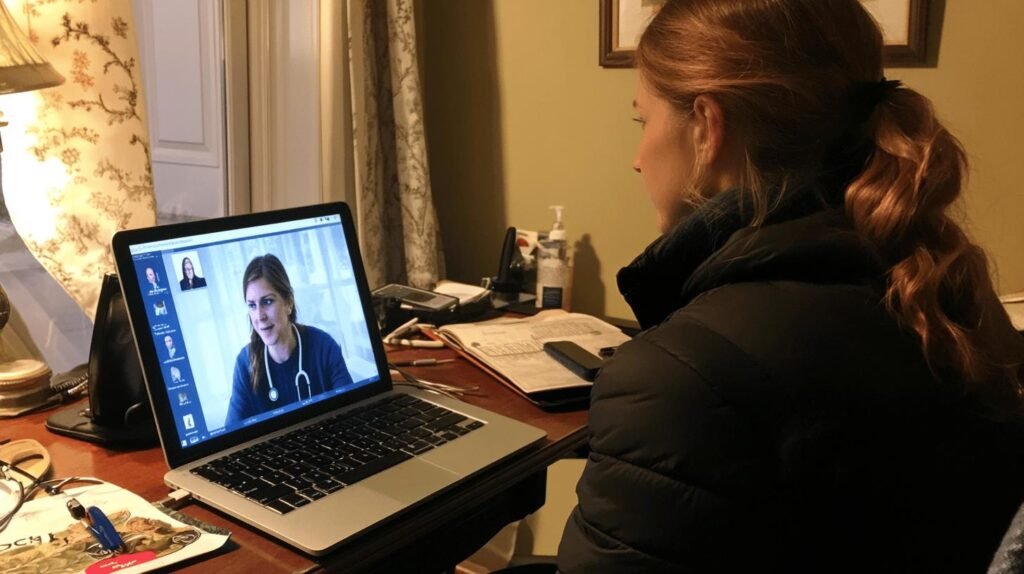
Quick answer: Telemedicine in Direct Primary Care means you can text, call, or video chat with your doctor without paying extra per visit. It is built into your flat monthly fee, making it a practical tool for busy families and employers who want fewer delays in care. To understand the full model behind this approach, read our guide on what Direct Primary Care is, or see how it compares to traditional coverage at DPC vs. insurance.
How Telemedicine Fits Into DPC
In a traditional insurance setup, a telehealth visit often means logging into a third-party platform, waiting for an available doctor you have never met, and sometimes paying a copay or being surprised by an out-of-network bill. Direct Primary Care strips that complexity away. Your DPC doctor is the same person you see in the office, and they typically use simple tools—secure messaging, phone calls, or standard video software—to connect with you remotely.
Because DPC does not bill insurance per visit, there is no coding requirement or gatekeeping. If you have a question at 7:00 a.m. or a rash you want your doctor to look at on a Saturday afternoon, you reach out directly. The telemedicine component is not a separate product bolted onto the practice; it is simply an extension of the same relationship.
What Families Actually Use It For
Parents quickly learn that not every childhood concern requires a trip to the clinic. Telemedicine within DPC tends to handle a specific, high-frequency set of family health needs:
- Red, goopy eyes that might be pink eye
- Rashes, minor burns, or insect bites that need a visual check
- Cold and cough symptoms when you are unsure whether to come in
- Follow-up conversations about lab results or medication adjustments
- Quick questions about whether a child can return to school or sports
For families juggling work, school, and extracurricular schedules, the ability to resolve these issues from home—without arranging childcare or leaving the office—removes a significant layer of daily stress. You can learn more about how this works for households at Direct Primary Care for families.
Why Employers Are Paying Attention
When employees have easy access to a doctor via phone or video, they are less likely to skip work for a minor issue or sit in an urgent care waiting room for three hours. For employers, this translates into measurable productivity gains and lower indirect costs, even though DPC itself is not an insurance product.
Employers offering DPC as a benefit often highlight the telemedicine piece as one of the first things employees actually use and appreciate. It answers a common frustration: “I just need a quick question answered, but the system makes it so hard.” If you are evaluating options for your team, employer Direct Primary Care explains how these arrangements are structured.
What Telemedicine in DPC Does Not Do
Honesty about limitations matters. Telemedicine, even within a DPC relationship, cannot replace a physical exam when one is necessary. A doctor cannot feel an abdomen, listen to a heart murmur, or suture a wound through a screen. DPC clinics will tell you plainly when you need to come in.
More importantly, DPC—including its telemedicine component—does not replace health insurance. It does not cover surgeries, hospitalizations, specialist referrals, or emergency care. Families and employers still need a high-deductible health plan or other coverage for those situations. The distinction is important, and DPC vs. concierge medicine and DPC vs. insurance both break down where the boundaries lie.
Technology Is Simple, Not Fancy
Do not expect a clunky, proprietary portal with forgotten passwords and session timeouts. Many DPC practices use encrypted text messaging or familiar video tools. Some use dedicated platforms, but the emphasis is usually on reliability and ease of access rather than feature overload. The goal is to lower the barrier to communication, not introduce a new software learning curve into your life.
Is It Worth It for Your Family?
If someone in your household gets sick a few times a year and you routinely debate whether a visit is “worth” the copay, the time, and the hassle, DPC telemedicine changes that calculation entirely. You ask the question, you get an answer from a doctor who knows your family, and you move on. For a clear breakdown of typical monthly costs, visit Direct Primary Care cost.
Ready to explore what this looks like in practice? Use our find a DPC doctor tool to locate clinics near you, and bring our DPC clinic checklist to your first conversation so you can ask the right questions about telemedicine access, hours, and how the practice handles after-hours calls.