
Quick answer: Direct Primary Care works by removing insurance companies from your everyday doctor visits. You pay a flat monthly fee directly to your clinic, which covers most primary care services like sick visits, chronic disease management, and basic labs. To understand the full model, read our guide to what Direct Primary Care is, or see how the cost of Direct Primary Care compares to traditional insurance.
The Basic Mechanics of DPC
At its core, Direct Primary Care is a financial arrangement between you and your doctor. Instead of submitting claims to an insurance company every time you need care, you pay a predictable monthly membership fee. In return, the clinic provides a defined set of primary care services. Because the doctor does not have to hire a team of billing specialists to fight with insurance companies, overhead drops significantly. That savings is redirected back into what actually matters: more time with your physician and better access to care.
What Is Actually Included
Every DPC clinic sets its own terms, but most memberships cover the vast majority of your day-to-day medical needs. When you tour a clinic, you should expect to see these standard services included in your fee:
- Unlimited sick and urgent visits
- Routine physicals and wellness exams
- Chronic condition management (like diabetes or high blood pressure)
- Basic in-office procedures (stitches, joint injections)
- Wholesale-priced labs and generic medications
This structure is particularly valuable for households managing ongoing health needs. You can learn more about how this benefits kids and parents alike on our Direct Primary Care for families page.
How DPC Interacts With Your Insurance
This is where families and employers often get confused. Direct Primary Care is not health insurance. It does not cover surgeries, hospital stays, specialist referrals, or emergency room visits. Think of DPC as the front door to the healthcare system, not the entire house.
Most DPC families keep a high-deductible health plan (HDHP) or a catastrophic insurance policy alongside their membership. You use your DPC doctor for everything from a stubborn sinus infection to a routine physical, and you rely on your insurance strictly for the big, unpredictable medical events. For a deeper breakdown of how these two tools fit together, read our article on DPC versus traditional insurance.
What a Typical Visit Looks Like
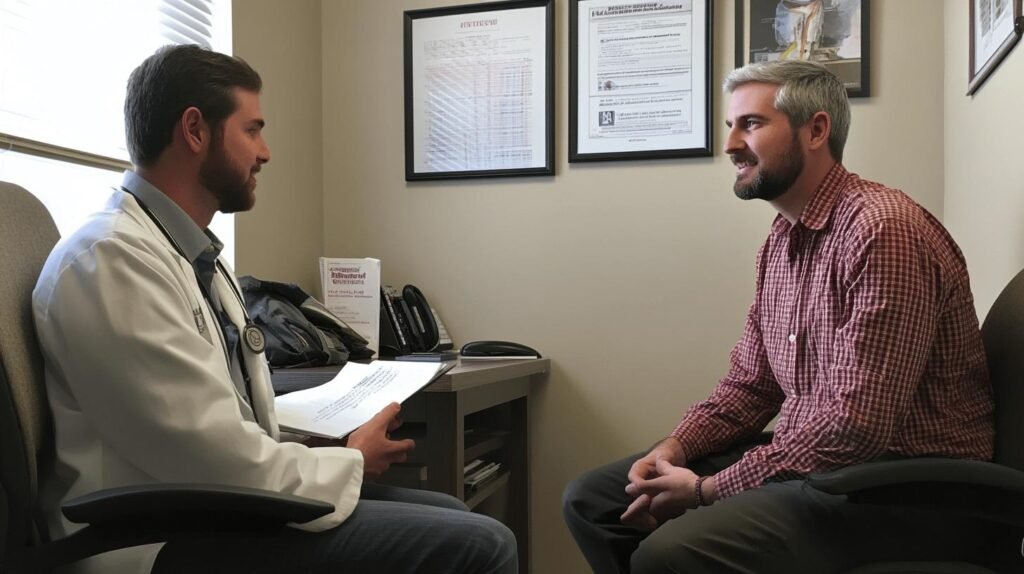
The patient experience in a DPC clinic feels noticeably different from a standard primary care office. When your child wakes up with an earache, you do not have to wait three weeks for an appointment. You call, text, or use a patient app, and you are usually seen the same day.
When you arrive, there is no clipboard full of redundant paperwork. You walk in, see your doctor, and spend an average of 30 to 60 minutes discussing the problem. If you need a prescription, the doctor often sends it to a pharmacy before you even leave the building. There is no co-pay at the front desk and no surprise bill in the mail three weeks later. It functions much like a gym membership: you already paid, so you just walk in and get what you need.
DPC Versus Concierge Medicine
People frequently assume DPC is just another word for concierge medicine, but the two models operate differently. Traditional concierge medicine usually requires an expensive annual retainer—often thousands of dollars—on top of your existing insurance. Patients still pay co-pays, deductibles, and out-of-network fees for specific services.
DPC, by contrast, is designed to be affordable and accessible. Monthly fees generally range from $50 to $150 per person, and the fee covers the actual care provided. There are no hidden charges or additional billing. If you want to understand these distinctions clearly, our DPC versus concierge medicine comparison breaks it down.
Why Employers Are Adopting DPC
It is not just families who are making the switch. Employers across the country are embedding DPC into their benefits packages as a way to control costs and improve workforce health. When employees have easy access to a primary care doctor, they are less likely to skip preventive care, less likely to use expensive emergency rooms for minor issues, and more likely to manage chronic conditions before they escalate. If you are evaluating options for your team, our employer Direct Primary Care resource outlines how the logistics work.
Getting Started With DPC
If you are ready to see what this model looks like in practice, the next step is finding a clinic that fits your family’s needs. Use our directory to find a DPC doctor near you, and before you sign anything, run the clinic through our DPC clinic checklist to make sure they meet the standards your family deserves.