
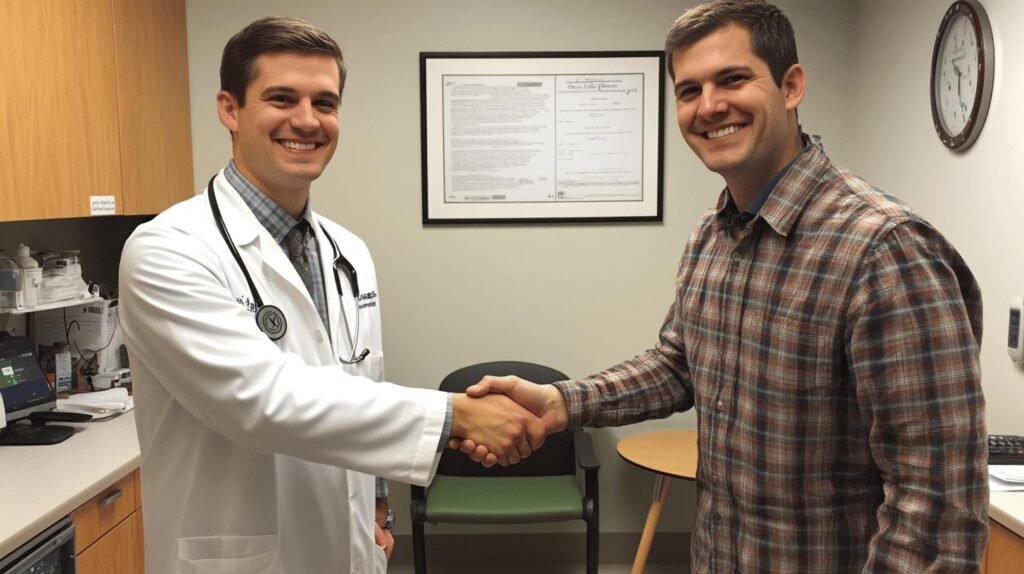
Quick answer: Direct primary care patient satisfaction tends to be remarkably high because the model removes the friction families experience in traditional insurance-based offices—long waits, rushed visits, and surprise bills. By charging a flat monthly fee instead of billing per service, DPC doctors can keep their patient panels small enough to actually know the people they treat. You can learn more about how the model works at what is direct primary care or explore typical pricing at direct primary care cost.
Why families report higher satisfaction in DPC
The core driver of satisfaction in direct primary care is simple: time. In a conventional practice, a physician may carry a panel of 2,000 to 3,000 patients. That math forces visits into tight 10- to 15-minute windows. DPC physicians typically manage 400 to 800 patients, which means 30- to 60-minute appointments become routine. Parents notice the difference immediately when a doctor has the bandwidth to hear the full story about a child’s recurring symptoms instead of interrupting to move to the next room.
Beyond appointment length, families appreciate several practical benefits:
- Same-day or next-day scheduling that works around school and work obligations
- Direct access to the physician via text, phone, or secure message after hours
- No copays at the time of visit, so there’s no hesitation to bring a child in early
- Transparent monthly pricing with no surprise statements arriving weeks later
The role of access in how patients feel about their care
Access is where DPC diverges most sharply from conventional primary care, and it shows up clearly in patient feedback. When a child wakes up with an earache at 6 a.m. on a Tuesday, a DPC family can often text their doctor, get a response within minutes, and be seen that morning if needed. That experience contrasts sharply with calling a standard office, navigating a phone tree, waiting on hold, and being told the next available slot is Thursday afternoon.
Employers notice this too. When employees can resolve a health concern quickly without taking a half day off work, it affects productivity and morale. For a deeper look at how this works for organizations, employer direct primary care covers the structure and results companies are seeing.
What the research and patient feedback actually show
Formal studies on DPC patient satisfaction are still emerging, but the existing data and survey results point consistently in one direction. Patients rate their DPC experience higher on measures of communication, thoroughness, and overall trust compared to their previous primary care arrangements. Anecdotal reporting from DPC clinics across the country echoes these findings—patients frequently describe feeling “listened to” and “known” in ways they hadn’t experienced before.
It’s worth being honest about the limitations here. Much of the evidence comes from patient surveys administered by clinics themselves, not from large-scale independent randomized trials. The model is still growing, and rigorous comparative research will take time. But the consistency of the feedback across different states, demographics, and clinic sizes makes it difficult to dismiss as a fluke.
How DPC compares to concierge medicine on patient experience
Families researching DPC often encounter concierge medicine and wonder whether the satisfaction levels are similar. The patient experience does share some surface features—longer appointments, better access, a focus on relationship-building. But the models differ in ways that matter to real families, especially on cost. Concierge practices typically charge a retainer on top of insurance, which can run into thousands of dollars per year per person. DPC replaces the per-visit billing layer with a modest monthly fee, usually between $50 and $150 per individual, and it’s designed to work for middle-income households, not just affluent ones. DPC vs concierge breaks down those differences in detail.
What DPC does not do—and why that matters for satisfaction
High satisfaction doesn’t mean DPC is a cure-all, and families who understand the model’s boundaries tend to be the most satisfied long term. DPC does not replace health insurance. It covers primary care services—office visits, basic labs, routine procedures, chronic disease management—but it does not cover surgeries, hospitalizations, specialist care, or emergency services. Families still need some form of coverage for those scenarios, whether that’s a high-deductible health plan paired with DPC or another arrangement. DPC vs insurance explains how the two fit together.
Patients who enter DPC expecting it to function as comprehensive health coverage will be disappointed. Patients who understand it as a better way to handle the majority of their family’s day-to-day medical needs tend to stay for years. Setting the right expectations on the front end is a big part of why satisfaction stays high.
Signs a DPC clinic will deliver on its promises
Not every DPC practice operates the same way, and satisfaction varies depending on how faithfully a clinic follows the model. Some practices label themselves as DPC but still carry large patient panels or limit after-hours access. Families and employers evaluating options should ask specific questions about panel size, appointment availability, communication methods, and what’s included in the monthly fee. This DPC clinic checklist walks through the key questions to ask before signing up. For families ready to start looking, find a DPC doctor offers a straightforward way to search for practices in your area. Direct primary care for families and the FAQ page are also useful if you’re still working through whether the model fits your household’s needs.
If you’re curious whether DPC could improve your family’s experience with primary care, the best next step is to talk to a few local practices directly. Use this directory to find a DPC doctor near you, and bring this clinic checklist to your first conversation so you can compare options with confidence.